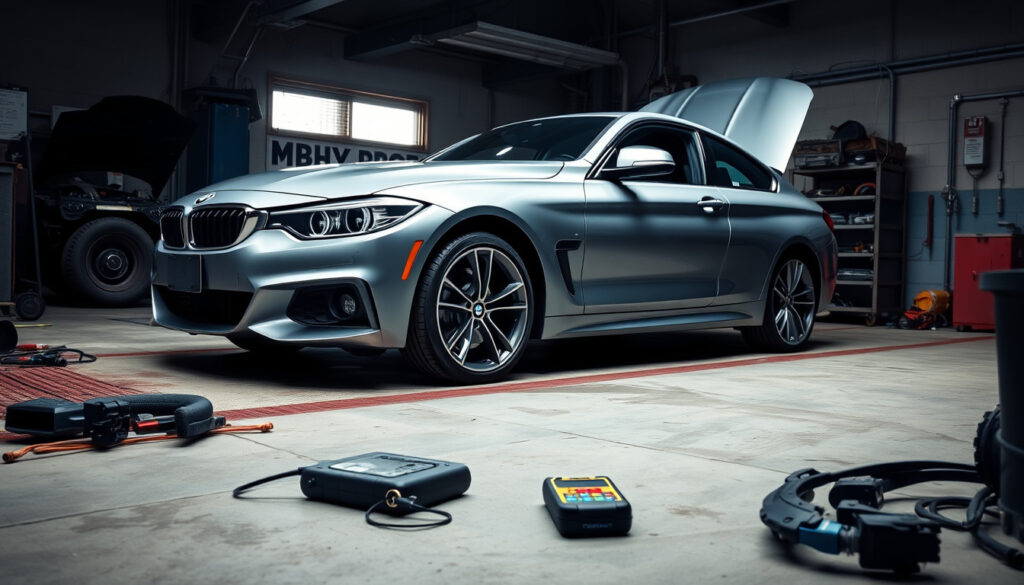
BMW 4 Series Gran Coupe Buyer’s Guide: Reliability & Problems
Sedans have a habit of playing it safe, but the BMW 4 Series Gran Coupe goes the other way with a coupe-like roofline, four doors, and a hatchback that opens wide enough for real cargo. BMW’s official specs credit the base 430i with 255 horsepower, and this guide sizes up the model years worth buying, the common problems that bite owners, and the reliability gap between BMW and Lexus.
Avg. used price (430i RWD): $15,885 ·
430i power: 255 hp ·
M440i power: 382 hp ·
0–60 mph (M440i xDrive): 3.9 seconds ·
Seats: 5 ·
Cargo volume: 17.0 cu ft
Quick snapshot
- The 430i uses a 2.0L turbo I4 with 255 hp; the M440i steps up to a 3.0L turbo I6 with 382 hp (per BMW USA’s official spec page). (Edmunds’ 2025 model review)
- BMW covers the 2025 model with a 4-year/50,000-mile basic warranty, and Edmunds lists no recalls for the 2025 model year (Edmunds’ 2025 model review).
- Whether timing-chain trouble is limited to 2014–2015 N20 engines or leaks into later builds — owner reports vary (Jalopnik’s 4 Series buyer’s guide).
- Reliability surveys disagree on the BMW-versus-Lexus gap: J.D. Power favors Lexus by a wide margin, while Consumer Reports ranks the two brands closer (per Lexus of Sacramento’s comparison page). (Jalopnik’s 4 Series buyer’s guide)
- 2014: first-generation F36 goes on sale; 2016: facelift; 2020: second-generation G26 arrives; 2021: M440i xDrive joins the lineup (per Car and Driver’s 4 Series Gran Coupe review). (Autoblog’s 2026 4 Series Gran Coupe coverage)
- The 2026 model still carries the 4-year/50,000-mile basic warranty, so coverage has not shrunk over time (Autoblog’s 2026 4 Series Gran Coupe coverage).
- BMW now sells the Gran Coupe body in gas form and as the all-electric i4, widening the choice for buyers who like the hatchback layout (per Autoblog’s 2026 coverage).
- Used 2021+ Gran Coupes will hit the sweet spot of the depreciation curve in the next few years — the redesigned car with factory warranty still warm.
BMW 4 Series Gran Coupe at a glance
Eleven specs, one pattern: every figure behind the Gran Coupe serves the same idea — coupe styling without the coupe’s practicality penalty — per Autoblog’s 2026 4 Series Gran Coupe coverage.
| Spec | Value |
|---|---|
| Body style | 4-door coupe with hatchback tailgate |
| Platform | BMW CLAR modular rear-drive architecture |
| Engines | 2.0L turbo I4 (430i, 255 hp); 3.0L turbo I6 (M440i, 382 hp) |
| Transmission | 8-speed automatic |
| Drivetrain | Rear-wheel drive standard; xDrive AWD optional |
| Seats | 5 |
| Cargo volume | 17.0 cu ft behind the rear seats |
| 0–60 mph | 5.8s (430i), 5.7s (430i xDrive), 3.9s (M440i xDrive) |
| Basic warranty | 4 years / 50,000 miles (2025 and 2026 models) |
| Complimentary maintenance | 3 years / 36,000 miles |
| Production | First gen F36 (2014–2020); second gen G26 (2021–present) |
The implication: the Gran Coupe’s spec sheet reads like a 3 Series with a bodywork upgrade and a hatch — the roofline costs a little rear headroom, and the M440i’s 3.9-second 0–60 time puts it in genuine sports-sedan territory.
Is a BMW 4 Series Gran Coupé a good car?
What makes the Gran Coupe different from the standard 4 Series?
- Four doors instead of two, with the coupe roofline intact.
- A hatchback tailgate that lifts with the rear glass, not a trunk lid.
- The same engine family as the coupe: turbo four in the 430i, turbo six in the M440i.
The idea sounds simple, but the execution is rare: a five-door body that reads as a coupe. The 4 Series Gran Coupe keeps the sloping roofline and wide stance of the two-door while adding a full hatchback, and Car and Driver’s review treats the combination as the model’s strongest argument — style without sacrificing utility (Car and Driver’s 4 Series Gran Coupe review). The gran turismo formula — a car that looks like a weekend toy but carries a week’s worth of luggage — is exactly what this body style gets right.
What do owners say about daily driving?
You sit lower, feel more road, and give up some rear headroom — but the Gran Coupe corners with a confidence that soft-riding sedans don’t offer. The 430i’s 255-hp turbo four is enough to make the daily commute feel shorter.
In daily use, the car splits the difference between sport and utility. The cabin seats five, the hatch swallows a surprising amount of luggage, and the base four-cylinder moves the car with authority. The recurring owner complaint, echoed in Car and Driver’s review, is a firm suspension that thumps over big potholes — the price of the athletic handling that makes the car genuinely enjoyable to drive. Rear-seat headroom pays a small tax to the sloped roofline: fine for kids, snug for tall adults.
Is the BMW 4 Series a reliable car?
Is the BMW Gran Coupe reliable?
- Edmunds gives the 2025 model a RepairPal reliability rating of 3.5 out of 5 and ranks it #39 of 68 luxury midsize cars (per Edmunds’ 2025 model review).
- J.D. Power’s 2024 U.S. Vehicle Dependability Study put Lexus first with 135 problems per 100 vehicles — a benchmark BMW has not matched recently (TopSpeed’s luxury brand reliability ranking).
- According to a Lexus dealership comparison page citing J.D. Power’s 2025 studies, Lexus ranked first in both initial quality and reliability, while BMW placed 14th and 9th.
- One ranking reportedly scores the 4 Series at 85 out of 100, ahead of many BMW stablemates in the same brand roundup (per TopSpeed’s ranking).
The pattern is consistent: the Gran Coupe lands in the middle of the luxury pack. The brand’s sporty tuning pulls some repair-frequency scores down, and the 2025 model’s clean recall record pulls them back up. That is not Lexus-level dependability, but it is far from the trouble zone. For a used buyer, “average” means one thing above all: the previous owner’s service habits will shape your repair bills more than any factory defect.
How long does a BMW 4 Series last?
- Well-maintained Gran Coupes routinely pass 150,000 miles — the documented failures are cooling-system parts and early-engine tensioners, not catastrophic engine or transmission failures (per Jalopnik’s 4 Series buyer’s guide).
The 8-speed automatic is generally solid. The cars that fail early are the ones with skipped coolant service or neglected maintenance, which is why a full service history matters more than the odometer reading. A Gran Coupe with documented cooling-system work is a better bet than a lower-mileage car with gaps in its records.
What are the common problems with the BMW 4 Series Gran Coupé?
Engine and transmission issues
- Timing-chain tensioner failures on early N20 engines from 2014–2015 are the best-known issue; later engines have been quieter on that front.
- Cooling-system leaks — water pump and thermostat failures — are the most commonly reported first-generation repairs.
None of these are “engine dies at 60,000 miles” stories. The N20 tensioner problem is real but concentrated early; the transmission is not a known weak point. What shows up repeatedly is cooling components that age out faster than the rest of the car, a pattern documented in Jalopnik’s 4 Series buyer’s guide. A pre-purchase cooling-system inspection should be non-negotiable on any first-generation car.
The 2014–2015 N20 timing-chain issue is the one failure that changes the ownership math — a pre-purchase inspection matters more than the price tag.
Electrical and infotainment glitches
- Battery-drain conditions and iDrive screen freezes are the most common electrical complaints on first-generation cars.
- The 2016 facelift introduced iDrive 5.0, and the second-generation system is notably more stable.
The 2025 model’s clean recall record, noted in the snapshot above, suggests the big electrical gremlins stayed in the past. Still, first-generation cars with battery-drain complaints usually trace back to a failing auxiliary battery or a module that refuses to sleep. Both are fixable, but the diagnosis time is where the bill grows.
Suspension wear
- Firm factory damping means worn bushings and struts show up as noise and harshness sooner than they would on a softer car.
- High-mileage examples should get a pre-purchase suspension inspection — control-arm bushings and rear shocks are the usual suspects.
Because the standard suspension is firm, any wear in the bushings or struts is amplified in the driving experience. A 100,000-mile Gran Coupe with tired suspension feels older than it is; the same car with fresh components feels almost new.
What year is the best BMW 4 Series?
Which BMW 4 Series to stay away from?
- Avoid 2014–2015 models with the early N20 engine — timing-chain tensioner issues are the biggest documented risk.
- Be cautious with first-year second-generation cars (2021) that lack a full service history; early production runs tend to carry more risk until factory updates roll in.
- Skip any Gran Coupe with a branded title, salvage history, or gaps in maintenance records.
Those three rules eliminate most of the trouble. The N20 timing-chain issue is concentrated in the first two model years; the 2016 facelift addressed both the engine concerns and the infotainment experience. That points to a clear conclusion for first-generation shopping: 2016–2018 models are the sweet spot, with the facelift’s improvements and prices that have already absorbed the steepest depreciation.
What changes came with the 2021 redesign?
- Second-generation G26 arrived for the 2021 model year with a new platform, updated styling, and a reworked interior.
- The 2021 lineup added the M440i xDrive Gran Coupe, pairing the 382-hp turbo six with all-wheel drive.
The redesign closed most of the first generation’s weaknesses: interior quality improved, the infotainment system got faster, and the engine lineup carried over the lessons learned from the N20 era. Buyers pay a premium for those gains — 2021+ cars sit well above first-generation prices in the used market, which makes the value calculation simple: the older car saves money upfront, the newer car saves money on repairs.
The pattern: buy late in a generation, not early. For the first generation, that means 2016–2018; for the second, a car with factory warranty remaining is the safer play.
Is the BMW 4 Series a luxury car?
Is BMW more luxury than Lexus?
- BMW’s luxury pitch is driving dynamics; Lexus’s is comfort and refinement — two valid answers to the same question (per Lexus of Sacramento’s BMW-versus-Lexus comparison).
- J.D. Power’s 2025 studies, summarized on the same page, put Lexus first in initial quality and first in reliability, with BMW 14th and 9th.
The 4 Series Gran Coupe competes directly with the Lexus IS and ES, and the contrast is sharpest inside the cabin. BMW’s interior feels driver-focused, with supportive seats and a cockpit that wraps around you; Lexus’s feels calmer and quieter, built around isolation rather than engagement. Neither is objectively “more luxury” — they serve different definitions of the word. If luxury means connection to the road and engineering flair, BMW delivers it in spades. If luxury means fewer trips to the service desk, the survey data speaks for Lexus.
What this means: the Gran Coupe is luxurious in the sporting sense — a premium car that flatters the driver first and asks for attention in return.
Why are BMW 4 Series so cheap?
Depreciation and maintenance costs
- A new 430i Gran Coupe starts around $46,000, while used 2018–2020 examples trade in the $20,000–$30,000 range — roughly half their original sticker price (Edmunds’ 2026 4 Series Gran Coupe page).
- Depreciation runs steeper than Lexus or Audi, which is exactly why the used market fills with affordable Gran Coupes.
- BMW’s warranty and maintenance package covers the early years; the gap appears when cooling-system and suspension work starts arriving at luxury-car rates.
The cheap sticker price is not a trick — it is depreciation doing what depreciation does. The 4 Series loses value faster than its Japanese rivals, and shoppers who would rather pay $25,000 than $46,000 step in. The real question is whether the maintenance line eats the savings, and the answer depends on which model year you choose and how the previous owner treated it.
What car is the poor man’s BMW?
- Historically, the “poor man’s BMW” label attaches to earlier 3 Series models like the E90 — a used BMW that delivers the badge without the new-car price.
- The 4 Series Gran Coupe inherited the role in a different form: a deeply depreciated 430i delivers the coupe experience for sedan money, if you budget for upkeep.
For buyers who want the BMW driving feel without BMW’s new-car pricing, a used Gran Coupe is one of the most effective ways to get it. The caveat is the same one that makes the car cheap in the first place: running costs. The car is a bargain only if the repair ledger stays under control.
Why this matters: a cheap 4 Series Gran Coupe is only cheap at the register — cooling-system repairs and suspension work decide what it really costs.
BMW 4 Series Gran Coupe vs. Lexus IS and ES
Three premium cars, one fork in the road: how much driving joy you demand versus how much effort you want to spend on upkeep.
| Attribute | BMW 4 Series Gran Coupe | Lexus IS | Lexus ES |
|---|---|---|---|
| Body style | 4-door coupe with hatchback | 4-door sedan | 4-door sedan |
| Cargo access | Full hatch, 17.0 cu ft | Trunk lid | Trunk lid |
| Driving character | Athletic, firm, driver-focused | Sport-sedan poise | Comfort-first cruiser |
| Base engine | 2.0L turbo I4, 255 hp | Gas engine lineup | Gas and hybrid lineup |
| Reliability signal | RepairPal 3.5/5, #39 of 68 luxury midsize | J.D. Power 2025: Lexus ranked first in reliability | |
| Depreciation trend | Steeper than Lexus or Audi | Slower | Slower |
| Best for | Shoppers who want style plus utility | Compact sport-sedan buyers | Comfort and low-hassle buyers |
The pattern: BMW sells excitement with a hatchback; Lexus sells serenity with a stronger dependability record. The Gran Coupe is the pick if you will actually use the cargo door and the handling; the Lexus pair is the pick if low hassle is the priority.
BMW 4 Series Gran Coupe specifications
Eleven specs, one summary: coupe styling, hatchback utility, and warranty coverage long enough to catch the model’s known weak points.
| Spec | Detail |
|---|---|
| Body style | 4-door coupe with hatchback tailgate |
| Platform | BMW CLAR modular rear-drive architecture |
| Engine (430i) | 2.0L turbo I4, 255 hp |
| Engine (M440i) | 3.0L turbo I6, 382 hp |
| Transmission | 8-speed automatic |
| Drivetrain | RWD standard; xDrive AWD optional |
| Seating | 5 |
| Cargo volume | 17.0 cu ft |
| 0–60 mph | 5.8s (430i), 5.7s (430i xDrive), 3.9s (M440i xDrive) |
| Warranty | 4 years / 50,000 miles basic; 3 years / 36,000 miles maintenance |
| Production | F36 (2014–2020); G26 (2021–present) |
The implication: the 430i’s numbers make it a genuine everyday car, while the M440i’s 3.9-second 0–60 time puts it in true sports-sedan company.
BMW 4 Series Gran Coupe pros and cons
Five reasons to buy, five reasons to hesitate: the Gran Coupe’s weaknesses are concentrated in early model years and the after-warranty ledger, not in the driving experience.
Upsides
- Hatchback practicality with coupe styling
- Engaging handling and a strong engine range from turbo four to turbo six
- RWD standard, xDrive AWD available
- Competitive factory warranty and complimentary maintenance
- 2021 redesign improved tech and interior quality
Downsides
- Firm ride over big potholes
- Steeper depreciation than Lexus or Audi
- Timing-chain risk on early 2014–2015 engines
- Reliability rating in the middle of the luxury midsize class
- Common problems center on cooling-system parts and electrical glitches
Why this matters: the car rewards drivers and charges for the privilege. The pros survive a test drive; the cons show up on repair orders — budget for both.
BMW 4 Series Gran Coupe timeline
Four dates that trace the model’s evolution — same sources as the timeline signal card above — and each one matters differently to a used-car buyer.
- — First generation (F36) goes on sale.
- — Facelift brings updated headlights and iDrive 5.0.
- — Second generation (G26) is unveiled.
- — M440i xDrive Gran Coupe joins the lineup.
The pattern: every generation fixed more of the previous one’s flaws. Buy late in a generation, not early, and the timeline works in your favor.
What’s confirmed vs. what’s unclear
Confirmed facts
- BMW sells the Gran Coupe as a 430i, M440i, and all-electric i4 in the U.S. (per BMW USA’s official product page)
- The 2025 model carries a 4-year/50,000-mile basic warranty and has no recalls listed on Edmunds’ page (per Edmunds’ 2025 model review)
- The hatchback-tailgate layout gives the Gran Coupe more cargo flexibility than any traditional sedan in its class (per Car and Driver’s 4 Series Gran Coupe review)
What’s unclear
- Whether timing-chain problems stay confined to 2014–2015 N20 engines or appear in later builds (see the snapshot above)
- How the reliability gap vs. Lexus shifts across surveys — J.D. Power and Consumer Reports tell different stories (see the reliability section)
- How much a used car’s final price depends on options, accident history, and maintenance records (see the depreciation section)
- Whether RepairPal’s 3.5/5 score translates into manageable bills, which depends entirely on prior owner care
The takeaway: confirmed items are the ones you can verify before buying; unclear items are the ones a pre-purchase inspection needs to settle.
What the reviews and surveys say
The Gran Coupe’s suspension is firm over big potholes, but the stiffness is balanced by athletic handling — the classic BMW trade of comfort for cornering.
BMW’s complimentary maintenance plan covers 3 years or 36,000 miles, which beats Mercedes-Benz’s standard 2-year service package — a real advantage in the first years of ownership.
Autoblog’s 2026 4 Series Gran Coupe coverage
J.D. Power’s 2025 surveys put Lexus first in initial quality and first in reliability, with BMW 14th and 9th respectively — a gap that shows up in real-world ownership surveys.
Lexus of Sacramento’s BMW vs. Lexus comparison
The pattern: reviewers admire the Gran Coupe; reliability surveys admire Lexus. Both can be true, and the right choice depends on which one you value more.
The verdict: should you buy a BMW 4 Series Gran Coupe?
The Gran Coupe is what it always claims to be: a coupe that fits a family, a hatchback that hides its size, and a BMW that corners like one. It is not a bargain car unless you count the used market’s steep depreciation as a discount, and it is not a Lexus — on purpose. Buy a 2016–2018 430i if you want the style at a used-car price, or a 2021+ car if you want the improved tech and fewer early-model headaches. For the U.S. buyer weighing BMW against Lexus, the choice comes down to tolerance for repair bills: budget real maintenance money on a Gran Coupe you will love driving — or pick the Lexus ES, trade the adrenaline for a smoother ride, and spend that money on everything else.
Related reading: Chanel Watch Guide: Are They Luxury? Worth It? Real vs Fake · Omega Watches for Women: Models, Price & Value Comparison
edmunds.com, compare.lexusofsacramento.com, bmwblog.com, edmunds.com, thisismoney.co.uk
Frequently asked questions
Is the BMW 4 Series Gran Coupe all-wheel drive?
RWD is standard on the 430i and M440i, and xDrive AWD is optional on both gas models, as the specifications table above shows. The all-electric i4 also extends the body style’s reach for buyers who want the hatchback layout without a gas engine.
Does the 4 Series Gran Coupe have a hatchback?
Yes — a full hatchback tailgate that lifts with the rear glass, giving 17.0 cu ft of cargo space behind the rear seats. It is the model’s best feature and the main reason to choose it over a 3 Series.
How does the 4 Series Gran Coupe compare to the 3 Series?
It rides on the same platform family and shares powertrains, but the Gran Coupe adds two more doors, a hatchback, and a coupe-like roofline, while typically costing more than the equivalent 3 Series sedan. You pay for the body style and the practicality it brings.
What is the difference between 430i and M440i?
The 430i uses a 2.0L turbo I4 with 255 hp and reaches 60 mph in 5.8 seconds; the M440i steps up to a 3.0L turbo I6 with 382 hp and hits 60 mph in 3.9 seconds with xDrive. Both use an 8-speed automatic.
Is the BMW 4 Series Gran Coupe good for families?
It seats five and the hatch makes it far more practical than the two-door coupe. Rear headroom is limited by the roofline, so taller teenagers may find the back seat snug, but the cabin layout and 17.0-cu-ft cargo bay work well for a family of four.
How much does a new BMW 4 Series Gran Coupe cost?
A new 430i starts around $46,000, and used 2018–2020 examples trade between $20,000 and $30,000. The pricing data in the stats line above shows some 430i models listed near $15,885, which is where the “cheap BMW” conversation begins.
What are the trim levels of the 4 Series Gran Coupe?
The U.S. lineup consists of the 430i, the M440i, and the all-electric i4 Gran Coupe, with RWD standard and xDrive AWD optional on the gas models. The M440i is the performance pick; the i4 is the electric alternative.
More related posts
 Father Of The Bride Cast
 Bad Guys 2: Parental Guide, Release & Age Rating
 Holly Hunter: Age, Career, Net Worth, Health Rumors (Fact Check)
 Cast Of Expendables 4
 Where to Watch Atlanta Braves vs Pittsburgh Pirates (2026)
 Private Practice: Is This Grey’s Anatomy Spin-Off Worth Watching
 Nomad Apple Watch Band: Reviews, Materials, and Buying Guide
 Cast Of Strange Darling
