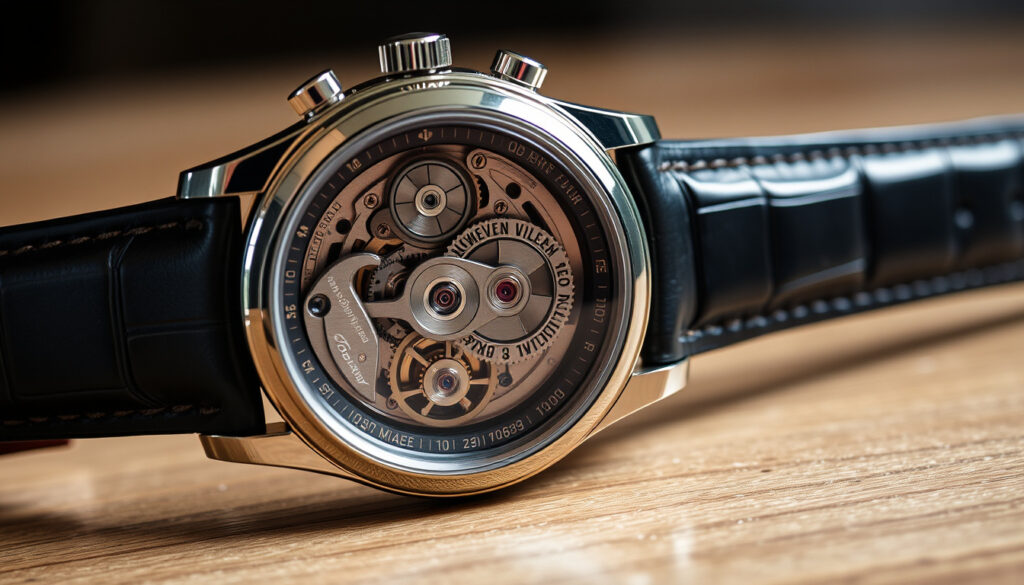
Self Winding Watches: Price, Brands, and How They Work
There’s a small joy in strapping on a watch that never needs a battery — just your daily motion keeps it going. Self-winding watches, also called automatics, run on a mechanical movement that winds itself as you wear it.
Movement type: Mechanical (no battery) · Winding method: Automatic via wearer’s wrist motion · Power reserve typical: 24 to 72 hours · Key manufacturer: Seiko, Citizen, Rolex, Hamilton · Service interval suggested: Every 3-5 years
Quick snapshot
- Mechanical watch powered by wrist motion (Citizen Watch Official Site (brand manufacturer))
- No battery required (Citizen Watch Official Site)
- Rotor winds mainspring automatically (Citizen Watch Official Site)
- Seiko: mechanical automatic watches from affordable to mid-range (Seiko Official Site (Japanese watchmaker))
- Citizen: automatic and Eco-Drive (solar) options (Citizen Watch Official Site)
- Rolex: luxury self-winding mechanical (Rolex Official Site (luxury watch manufacturer))
- Entry-level: under $500 (Seiko 5 Sports) (Seiko Official Site)
- Mid-range: $500–$2,000 (Citizen automatic collection up to ~CA$9,500) (Citizen Watch (Canada official site))
- Luxury: above $2,000 (Rolex) (Rolex Official Site)
- Service every 3-5 years recommended (Citizen Watches (Eco-Drive technology page))
- Power reserve 24-72 hours (Citizen Watch Official Site)
- Kinetic capacitors last around 10-15 years (Seiko Official Site)
The data forms a clear picture: self-winding watches eliminate batteries but vary widely in price and brand positioning.
| Label | Value | Source |
|---|---|---|
| Movement type | Mechanical automatic | Citizen Watch |
| Battery needed | No | Citizen Watch |
| Citizen automatic price range (CAD) | $722 – $19,995 | Citizen Canada |
| Rolex self-winding model family | Oyster Perpetual | Rolex |
| Seiko automatic lineup example | Seiko 5 Sports | Seiko |
| Service interval recommended | Every 5-7 years (Citizen), 3-5 years (general) | Citizen |
What is self-winding in a watch?
How a self-winding watch works without a battery
A self-winding watch uses a metal rotor that swings with the wearer’s natural arm motion. That rotor winds a mainspring, storing energy to power the gear train and balance wheel. There is no electrical power involved — it’s entirely mechanical.
Citizen’s official site describes its automatic watches as “self-winding and powered by the natural motion of the wearer’s wrist.” The key components are the rotor, mainspring, and escapement. A full wind from typical daily activity provides a power reserve of 24 to 72 hours, depending on the caliber (Citizen Watch Official Site).
Self-winding means you never have to manually wind or replace a battery — just move your wrist. But if you leave the watch off for more than a day, you’ll need to reset it or use a watch winder.
The pattern is clear: the mechanism trades electrical simplicity for mechanical engagement, demanding consistent wrist time in exchange for independence from batteries.
Rotor and mainspring mechanics
The rotor is a half-moon weighted disc that rotates on a pivot as the wrist moves. Each rotation winds the mainspring via a series of reduction gears. A slipping clutch prevents overwinding once the spring is fully coiled. This mechanism has been refined for decades and is the same principle used in the first automatic watches from the 1920s (Citizen Watch Official Site).
Can you still buy self-winding watches?
Current availability from major brands
Yes, self-winding watches are widely available. Nearly every traditional watchmaker offers at least one automatic model. Seiko’s lineup includes the Seiko 5 Sports series, Prospex, and Presage, all mechanical automatics (Seiko Official Site). Citizen sells automatic collections alongside its solar-powered Eco-Drive line, with prices spanning from a few hundred to nearly $20,000 CAD (Citizen Canada). Rolex’s entire catalogue — Submariner, Daytona, Datejust — uses self-winding mechanical movements (Rolex Official Site).
Price range for new and pre-owned
New self-winding watches start under $100 for budget-friendly models like the Seiko 5 Sports or Citizen automatic entry-level pieces. The Citizen automatic range in Canada starts at CA$722 and goes to CA$19,995 for the high-end The CITIZEN calibers (Citizen Canada). Rolex models typically start above $5,000 and can exceed $50,000. Pre-owned prices vary widely but often retain value better than quartz watches.
The used market offers a way into brands like Rolex at lower prices, but always verify authenticity and service history. A pre-owned Rolex Submariner from 2020 still sells for near its retail price.
Is a self-winding watch good?
Pros of self-winding: no battery, craftsmanship, longevity
- No battery replacements needed — powered by movement (Citizen Watch)
- Mechanical engineering appreciated by watch enthusiasts
- With proper service, can last decades
- Smooth sweep second hand (many quartz watches tick)
Cons: accuracy drift, need for regular wear or winder
- Accuracy typically ±10–30 seconds per day, far less than quartz (±15 seconds per month for Citizen Eco-Drive) (Citizen Watches)
- Requires daily wear or a watch winder to keep running
- Service costs can be high ($100–$800 depending on brand and complexity)
Why this matters: Self-winding watches appeal to those who value mechanical artistry and dislike battery waste. The trade-off is that they need more attention and regular servicing than a quartz watch.
What is the best self-winding watch?
Budget options: Seiko 5 Sports, Citizen Automatic
Seiko 5 Sports offers reliable automatic movements (4R36 caliber) at around $150–$300 (Seiko). Citizen’s automatic collection starts around CA$722 and includes models with day-date complications (Citizen Canada). These are the best value picks for someone wanting a mechanical watch under $500.
Mid-range: Hamilton Khaki, Tissot Le Locle
Brands like Hamilton and Tissot (owned by Swatch Group) produce Swiss-made automatics with ETA movements. Hamilton Khaki Field Automatic is a popular choice at $500–$800. Tissot Le Locle offers a dressier option with a Powermatic 80 movement and 80-hour power reserve (Citizen Watch).
Luxury: Rolex Submariner, Omega Seamaster
Rolex Submariner is an icon of self-winding luxury, with prices from $8,000 new. Rolex positions the Oyster Perpetual as a self-winding model family (Rolex). Omega Seamaster, with Co-Axial movements, competes directly with Rolex in the $5,000–$10,000 range.
“Best” is personal. A $150 Seiko 5 keeps time just as reliably as a $10,000 Rolex — the difference lies in finishing, brand cachet, and resale value. Buy for the movement, not the name.
Does Seiko make self-winding watches?
Seiko’s automatic lineup: Seiko 5, Prospex, Presage
Yes, Seiko produces a wide range of self-winding watches. The Seiko 5 Sports is the entry point, with a 4R36 movement and day-date display. Prospex offers dive and field watches with 6R calibers, and Presage provides dress automatics with enamel dials (Seiko Official Site).
Internal movement manufacturing (4R, 6R, 8L calibers)
Seiko manufactures its own movements, a rarity outside luxury brands. The 4R family (used in Seiko 5) is robust and affordable, while the 8L caliber (in Prospex LX) offers high-grade finishing comparable to Swiss chronometers (Seiko Official Site).
Is Seiko higher end than Citizen?
Brand positioning and price tiers
Seiko and Citizen compete in overlapping price brackets. Citizen’s automatic collection in Canada ranges from CA$722 to CA$19,995, while Seiko’s Prospex goes up to around $3,000. Both are mass-market but Seiko often commands a premium in mechanical circles (Citizen Canada).
Movement technology: Seiko automatic vs. Citizen Eco-Drive
Citizen leads in solar technology with Eco-Drive, which never needs a battery replacement. Seiko focuses on mechanical automatics, with Kinetic (auto-quartz hybrid) as an alternative. For pure self-winding, Seiko offers a wider range of in-house mechanical calibers (Citizen Watches).
Durability and reputation
Both brands have strong reputations for reliability. Citizen’s Eco-Drive is low-maintenance and accurate (±15 seconds per month) (Citizen Watches). Seiko mechanical watches require more frequent servicing but are prized for their engineering.
The trade-off: Seiko mechanicals are more “pure” but require regular wear; Citizen Eco-Drive offers convenience and lower maintenance.
Are Seiko as good as Rolex?
Accuracy and finishing differences
Rolex movements are certified chronometers (−2/+2 seconds per day). Seiko’s 4R movements run within ±15–45 seconds per day. Finishing on Rolex is hand-finished to a higher standard. However, Seiko’s higher-end 6R and 8L calibers approach Swiss precision at a fraction of the cost.
Price differential and resale value
Seiko watches lose value immediately after purchase, while Rolex often appreciates or holds value. Rolex’s brand cachet is unmatched in the mainstream luxury segment. For the price of one Rolex Submariner, you could buy ten Seiko 5 Sports.
Investment value
Rolex is considered a store of value by many collectors. Seiko is a tool watch — excellent quality but not an investment. If you’re buying for long-term value, Rolex wins. If you’re buying a reliable daily automatic, Seiko delivers better value.
What is the lifespan of a Seiko Kinetic watch?
Kinetic movement description (auto-quartz hybrid)
Seiko Kinetic uses a rotor to charge a capacitor, which then powers a quartz movement. It’s an automatic with quartz accuracy (±15 seconds per month) and no battery. The capacitor degrades over time and typically lasts 10-15 years before replacement is needed (Seiko Official Site).
Expected service life and capacitor replacement
The movement itself can last indefinitely with proper care and capacitor swaps. Service costs for a capacitor replacement are around $100–$200, depending on the model (Seiko Official Site).
Self-winding watches price
Entry-level under $500
Seiko 5 Sports starts at $150, Citizen automatics from CA$722. You can find good automatics under $500 from Seiko, Citizen, and Orient.
Mid-range $500–$2,000
Hamilton Khaki, Tissot Le Locle, Seiko Prospex fall here. These offer Swiss or Japanese in-house movements with better finishing and longer power reserves.
Luxury above $2,000
Rolex, Omega, Grand Seiko dominate this bracket. Rolex Submariner starts around $8,000. For $2,000–$5,000, you get high-end automatic movements with chronometer certification (Rolex Official Site).
Self-winding watch vs automatic
Terminology identical
“Self-winding” and “automatic” are the same thing. Both refer to a mechanical watch that winds itself via wrist motion. There is no distinction in watchmaking (Citizen Watch Official Site).
Manual-wind vs. self-wind distinction
Manual-wind watches require daily hand-winding, while self-winding automatics wind themselves. Both are mechanical. The only difference is the presence of a rotor.
Comparison: Seiko vs. Citizen vs. Rolex self-winding watches
Three price tiers, one key pattern: the more you spend, the better the accuracy, finishing, and resale value.
| Feature | Seiko | Citizen | Rolex |
|---|---|---|---|
| Movement type | Mechanical automatic | Mechanical automatic + Eco-Drive | Mechanical automatic (chronometer) |
| Entry price | ~$150 (Seiko 5) | ~CA$722 | ~$5,000+ |
| Accuracy (per day) | ±15–45 seconds | ±15 sec/month (Eco-Drive) | −2/+2 seconds |
| Power reserve | 40–72 hours | 24–72 hours (auto); 6 months (Eco-Drive) | 48–70 hours |
| Service interval | 3-5 years | 5-7 years | 5-10 years |
| Resale value | Low | Moderate | High |
The pattern: Rolex commands premium pricing for precision and cachet, Seiko offers mechanical access at entry-level, and Citizen bridges both worlds with its Eco-Drive alternative.
Self-winding watch specifications (Citizen Promaster Mechanical GMT example)
One model, all key specs: the Citizen Promaster Mechanical GMT NB6045-51H illustrates the typical mechanical automatic package.
| Specification | Value |
|---|---|
| Movement | Automatic mechanical |
| Case size | 44.5 mm |
| Power source | Wrist motion (self-winding) |
| Power reserve | Approx. 40 hours |
| Accuracy | ±15 seconds per day (typical mechanical) |
| Crystal | Sapphire |
| Water resistance | 200 m |
| Functions | GMT, date, 24-hour hand |
Source: Citizen Onlineshop (European official site)
The implication: this spec sheet shows a robust dive-ready GMT with mechanical movement — a typical mid-range package that balances utility with self-winding technology.
What’s clear and what’s uncertain
Confirmed facts
- Self-winding means automatic mechanical movement without a battery (Citizen Watch Official Site)
- Seiko and Citizen compete in the same budget-to-mid-range market (Seiko Official Site; Citizen Canada)
- Rolex is significantly higher in price and prestige than Seiko (Rolex Official Site)
- Seiko Kinetic watches use a capacitor that degrades over time (Seiko Official Site)
- Citizen Eco-Drive never needs a battery replacement (Citizen Watches)
What’s unclear
- Exact lifespan of a specific Seiko Kinetic model without service records
- Cost of replacing a Seiko solar battery — varies by model and service center
- Which Citizen automatic movement is used in each price tier without referring to specific model numbers
“Our automatic watches are self-winding and powered by the natural motion of the wearer’s wrist.”
— Citizen Watch Official Site
“The Oyster Perpetual is a self-winding model family, engineered for precision and durability.”
— Rolex Official Site
Editor’s note: The value of a self-winding watch is not in its absolute accuracy — quartz beats mechanical every time — but in the craftsmanship and connection to a centuries-old tradition. For a buyer in the U.S. looking for a battery-free daily wearer under $500, the choice is clear: a Seiko 5 Sports or Citizen automatic delivers reliable mechanical movement without breaking the bank. For the collector or investor, Rolex’s premium pricing reflects its unmatched resale and prestige. The decision comes down to what you value more: mechanical purity or convenience.
citizenofficial.com, citizenwatch.com, citizenwatch.eu, citizenwatch-global.com, citizenwatch.com, citizenwatch.eu, citizenwatch.com, citizenwatch.com
Frequently asked questions
Are self-winding watches good for daily wear?
Yes, they are designed for daily use. As long as you wear them regularly, they stay wound and running. If you switch watches often, a winder can help.
How often do you need to wind a self-winding watch?
You don’t need to wind it if you wear it daily — your motion does the work. If left off for more than a day, you may need to manually wind it to restart the movement.
Can you wear a self-winding watch every day?
Absolutely. Every-day wear is ideal because it keeps the mainspring wound and reduces the need for manual winding.
Do self-winding watches need a battery?
No, they are purely mechanical and require no battery. Some hybrids like Seiko Kinetic use a capacitor but no standard battery (Seiko).
Are self-winding watches more accurate than quartz?
No, quartz watches are significantly more accurate. Citizen Eco-Drive quartz is ±15 seconds per month, while a mechanical automatic can drift 15–45 seconds per day (Citizen).
How do I wind a self-winding watch manually?
Turn the crown clockwise about 20-30 times when the watch is off your wrist. This gives a full manual wind to start the movement.
What is the best self-winding watch for women?
Brands like Seiko offer the Seiko 5 Sports in smaller sizes (e.g., 34–38 mm). Citizen’s automatic collection includes models from 34 mm upward. Rolex’s Oyster Perpetual also comes in 31 mm and 36 mm versions (Citizen).
How much does it cost to replace the solar battery in a Seiko watch?
For Seiko solar or Kinetic models, replacement costs typically range from $100 to $200 depending on the required capacitor and labor (Seiko Official Site).
Is Seiko considered a cheap watch?
Seiko spans affordable to luxury tiers. Entry-level models like Seiko 5 Sports are budget-friendly, but Grand Seiko commands prices over $5,000. The brand competes on value, not cheapness.
More related posts
 Peacemaker Season 1: Review, Cast & Streaming
 Watch Madam Secretary Online Free: Best Streaming Options
 Joe Lo Truglio: Ethnicity, Wife, Kids, Net Worth & Career
 Cast Of Resident Alien
 Where to Watch Atlanta Braves vs Pittsburgh Pirates (2026)
 Cast Of Creed Iii
 Apple Watch Series 10 vs Ultra 2: Which Should You Buy
 The Cast Of Chicago Med
