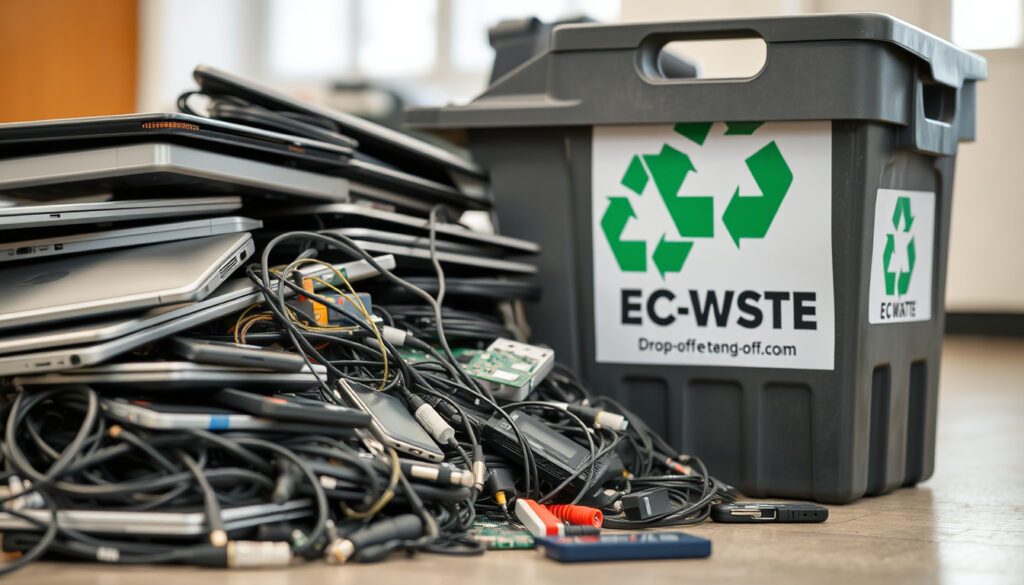
How to Recycle Electronics: Step-by-Step Guide & Free Drop-Offs
There’s probably a drawer in your home right now filled with old phones, dead laptops, and cables you’ll never use again. Few things in modern life accumulate as quietly as outdated electronics — and figuring out what to do with them without breaking laws or leaking your personal data is more complicated than it should be. This guide walks through the exact steps to prep, wipe, and drop off your devices safely and often for free, with guidance from the U.S. Environmental Protection Agency (federal regulator) and state-level experts.
Global e-waste generated in 2022: 62 million tonnes (UN) ·
E-waste recycling rate: less than 20% (WEF) ·
Estimated value of raw materials in e-waste: $57 billion annually (UN) ·
Drop-off locations in the UK: over 2,000 (Recycle Now)
Quick snapshot
- Anything with a plug or battery is accepted at most WEEE drop-offs (US EPA)
- Back up, wipe data, remove batteries if possible (Wisconsin DNR)
- Use retailer take-back, local council sites, or certified recyclers (US EPA)
- E-waste is illegal to landfill in many areas; batteries cause fires (Wisconsin DNR)
With 62 million tonnes of e-waste generated globally in 2022 and less than 20% recycled, every device you divert from a landfill keeps precious metals in circulation and toxic materials out of soil and water. The trade-off: you must handle data security yourself before dropping anything off.
| Metric | Value | Source |
|---|---|---|
| Global e-waste generated in 2022 | 62 million tonnes | United Nations (environment programme) |
| Global e-waste recycling rate | Less than 20% | World Economic Forum (economic research) |
| Annual value of raw materials lost in e-waste | $57 billion | United Nations (environment programme) |
| Drop-off points in the UK | Over 2,000 | Recycle Now (UK waste authority) |
The implication: the scale of the problem is vast, but the path to a solution — individual action at the drop-off bin — is within reach.
What’s the best way to dispose of old electronics?
Compare local government programs vs. retailer take-back
The U.S. EPA (federal regulator) notes that community drop-off points, certain retailers, and manufacturers may collect electronics through mail-in, take-back, and warranty programs. In practice, local council sites in the UK, municipal collection events in the U.S., and retailer programs like Best Buy’s free take-back in many states cover the bulk of options. The catch: not all programs accept large appliances or items with refrigerants, so check their lists ahead.
Certified e-waste recyclers and their roles
The EPA (federal regulator) says there are currently two accredited certification standards for electronics recyclers: R2 and e-Stewards. Both require destruction of all data on used electronics. Certified programs also provide a way to assess environmental, worker health, and security practices. Look for recyclers like eAsset Solutions (R2/RIOS certified recycler) who install security-monitored drop-off bins, or Green E-Waste Recycling Center (ISO 14001:2015 and NAID AAA certified) who provide certificates of data destruction.
A certified recycler gives you a contractual guarantee that your data will be destroyed and that the materials won’t end up in a landfill or an unregulated export stream. For the average household, paying a small fee to a certified recycler is worth more than a free unverified bin.
Donation and reuse as a first option
Before recycling, consider whether a device can still serve someone. Many charities and schools accept working computers and phones, provided you’ve wiped the data and factory reset the device. The Wisconsin DNR (state environmental agency) recommends checking manufacturer, operating system, and retailer instructions for device-specific wiping steps before donation. This route extends the device’s life and keeps it out of the waste stream entirely.
What electronics can be recycled?
Small household appliances
Anything with a plug or battery is accepted at most WEEE drop-offs, according to the EPA (federal regulator). This includes toasters, kettles, hair dryers, vacuum cleaners, and coffee makers. Many councils accept smaller items in curbside collections, especially in the UK and EU where WEEE regulations are well established. Green Wave Electronics (certified recycler) says many common electronics are accepted for free drop-off, including computers, laptops, cell phones, printers, batteries, and cables.
IT equipment (computers, printers, phones)
IT equipment represents the largest category of e-waste by value. Computers, monitors, printers, mice, keyboards, phones, and tablets all contain recoverable precious metals. Older CRT monitors contain lead and require special handling — many drop-off points charge a fee for these, and some states ban them from landfill entirely. The EPA (federal regulator) notes these devices must be handled by certified recyclers who can safely extract the leaded glass.
Batteries and accessories
Lithium-ion batteries are a major fire risk in landfills, and the EPA (federal regulator) warns they should never go in household trash. Most drop-off sites accept batteries separately, often in designated bins. Cables, chargers, and power adapters are almost always accepted for free.
Large appliances and TVs
Fridges, washing machines, dishwashers, and large TVs are accepted at many municipal waste facilities, though some retailers charge a removal fee when delivering a new appliance. Items containing refrigerants (fridges, ACs) require specialist handling — check with your local council first. The trade-off: free drop-offs for large appliances are rarer, but some manufacturers offer free take-back when you buy a replacement.
The implication: the “recyclable” category is wider than most households realize — but the devil is in the details of battery removal, CRT handling, and refrigerant extraction.
What electronics should never be thrown away?
Hazardous components: batteries, mercury lamps, CRT tubes
Lithium-ion batteries can cause fires in landfills and waste trucks, making them the single most dangerous item in the e-waste category. The EPA (federal regulator) states that cathode ray tubes (CRTs) are banned from landfill in most regions because they contain 4-8 pounds of lead per unit. Mercury lamps from older projectors and scanners also require specialist disposal — never toss these in the bin.
Devices containing personal data
Any device that stores personal information — laptops, phones, tablets, external hard drives, even smart home hubs — should never go in the trash without being wiped first. The Wisconsin DNR (state environmental agency) advises users to find out how a recycler or refurbisher will protect data security before recycling, giving away, trading in, or selling electronics. Factory resetting is a start, but the Wisconsin DNR notes that iOS, Android, and Windows mobile devices may have built-in factory reset features that help with data wiping — yet a factory reset does not guarantee permanent erasure for SSDs or encrypted drives.
Items with refrigerants (fridges, ACs)
Refrigerants like CFCs and HFCs deplete the ozone layer and are strictly regulated. The EPA (federal regulator) requires that these be captured by certified technicians during recycling. Never put a fridge, freezer, air conditioner, or dehumidifier in household trash — it’s both illegal and environmentally destructive.
What this means: for the average household, the hard rule is simple — anything with a battery, a screen, a power cord, or a cooling compressor stays out of the bin.
Even “recyclable” electronics can be rejected if they contain damaged lithium-ion batteries. Many drop-off points refuse swollen or punctured batteries for safety reasons, so check with your facility before hauling a potentially hazardous device across town.
Do I need to remove the hard drive before recycling my computer?
Steps to wipe a hard drive securely
Yes — and a simple factory reset is not enough. The Wisconsin DNR (state environmental agency) recommends backing up files first, then using data-removal software or the manufacturer’s built-in secure erase function. Wisconsin DNR advises checking manufacturer, operating system, and retailer instructions for device-specific wiping steps. For Windows, tools like DBAN (Darik’s Boot and Nuke) are free and effective for HDDs, while SSDs require a manufacturer utility or a certified recycler’s destruction process.
Physical destruction vs. software overwrite
For most home users, software overwrite is sufficient — but only if done properly. The EPA (federal regulator) requires both R2 and e-Stewards certified recyclers to destroy all data on used electronics, which can mean shredding the drive physically. Green E-Waste Recycling Center (ISO/NAID certified recycler) provides certificates of data destruction to prove the drive was wiped or destroyed. The trade-off: if you do the wiping yourself with verified software, you avoid handing over the drive intact — but you take full responsibility that the overwrite succeeded.
When removal is recommended vs. mandatory
Removal is recommended if you plan to keep the drive for reuse or separate destruction. It’s mandatory if your recycler requires it and does not provide on-site shredding. The Wisconsin DNR (state environmental agency) recommends asking recyclers how they will keep data-containing devices secure and whether they erase or wipe personal data. Wisconsin DNR also advises looking for recyclers with NAID certification or other robust data-protection and erasure procedures.
Can I throw a laptop in the bin?
Legal consequences of discarding e-waste in household trash
Throwing laptops in the trash is illegal in many jurisdictions. The EPA (federal regulator) states that landfilling e-waste is banned in many US states and across the EU under WEEE directives. In the U.K., the Waste Electrical and Electronic Equipment (WEEE) Regulations make it an offense to dispose of covered items in household waste. Fines vary by locality but can reach several hundred dollars for repeat offenses.
Safe alternatives: curbside electronics collection, local drop-offs
Most areas offer safe alternatives. In the UK, over 2,000 drop-off points are listed via Recycle Now (UK waste authority). In the U.S., retailers like Best Buy (national retailer with take-back program) offer free drop-off for most electronics in participating states. Some councils offer curbside collection for small electronics if placed in a separate bag or container.
What to do if your area lacks free recycling
If you can’t find a free drop-off, manufacturer take-back programs often cover shipping costs for mail-in recycling. Apple, Dell, HP, and Lenovo all offer such programs. The EPA (federal regulator) also recommends checking with your local council for periodic collection events. For business e-waste, many certified recyclers charge per pound but provide certificates of destruction and recycling — worth the cost for liability protection.
The trade-off: free recycling is widely available for household quantities, but large volumes or business e-waste will likely incur a fee. That fee is still cheaper than the fine for illegal dumping.
The EPA recommends using certified electronics recyclers to manage unwanted used electronics, and both R2 and e-Stewards programs require destruction of all data on used electronics.
US EPA (federal regulator) — official guidance
We want to make sure that when you bring your items in for recycling, you have peace of mind knowing your data will be destroyed — just the same as our business and government clients.
Green Wave Electronics (R2 certified recycler) — public drop-off program
For the average household in the U.S. or U.K., the choice is clear: back up, wipe, remove batteries, and take your electronics to a certified drop-off — or risk data breaches, landfill fires, and legal fines that dwarf the convenience of tossing it in the bin.
Confirmed facts
- Data wiping software can permanently erase hard drives (Wisconsin DNR)
- Lithium-ion batteries are a major fire risk in landfills (US EPA)
- CRT monitors require special handling (US EPA)
- Certified recyclers (R2, e-Stewards) destroy all data (US EPA)
What’s unclear
- Exact recycling rates vary by region
- Some local programs may charge fees for certain items
greentec.com, epa.gov, hamiltoncounty.in.gov, eridirect.com, digitalbridge.ngo, recycleforce.org, sadoffelectronicsrecycling.com
If you’re looking for local options, a guide to recycling electronics in Ireland offers free drop-off details similar to those covered here.
Frequently asked questions
Can I recycle broken electronics?
Yes. Most drop-off points accept broken electronics, including cracked screens, non-functioning laptops, and damaged cables. However, items with leaking batteries or shattered CRT tubes may require special handling or incur a fee. Check with your recycler before bringing them in.
What about cables and chargers?
Cables, chargers, and power adapters are almost always accepted for free at e-waste drop-offs. They contain copper and other metals that are easily recovered. Many retailers also collect them in designated bins near entrances.
Do I need to remove the battery before recycling?
Yes for devices with removable batteries (older phones, laptops). For sealed units (modern smartphones, tablets), leave the battery in place — the recycler will handle it. Never try to remove a swollen or damaged battery yourself; take the entire device to a professional.
How do I erase personal data from my phone before recycling?
For iPhones, use Settings > General > Transfer or Reset > Erase All Content and Settings. For Android, go to Settings > System > Reset > Factory data reset. Ensure you sign out of iCloud or Google accounts first. The Wisconsin DNR notes that these built-in features help with data wiping, but for sensitive data, a certified recycler’s destruction is safer.
What should I do with old printer cartridges?
Most office supply stores (Staples, Office Depot) offer free drop-off bins for cartridges. Many manufacturers also provide prepaid mail-in envelopes. Cartridges are not accepted in standard e-waste streams because they contain toner powder that requires separate handling.
Are there any electronics that have to be shipped to a specialist?
Yes — items containing refrigerants (fridges, ACs, dehumidifiers), large CRT TVs, and medical devices often require specialist transport. Contact your local council or a certified recycler for guidance on these items. Some manufacturers offer free take-back for their own products.
Can I recycle electronics from a business for free?
Free drop-off programs are typically for household quantities only. Businesses and institutions may be charged per pound or per item. However, many certified recyclers offer free collection for small quantities from local businesses. Check with R2 or e-Stewards certified recyclers in your area.
What happens to recycled electronics?
Devices are first sorted for reuse (working items are refurbished and donated or resold). Non-working items are shredded or dismantled to recover metals (copper, gold, silver, palladium), plastics, and glass. The EPA notes that certified recyclers ensure hazardous materials like lead and mercury are safely contained.
More related posts
 Cast Of Deli Boys
 Paris Jackson: Biography, Paternity, Net Worth & Identity
 Andrew Rannells: Broadway Biography, Partner, and Family
 Hisense 100-Inch TV Review: Is This Giant Screen Worth It
 Cast Of The Walking Dead Daryl Dixon
 Subway Series 2025: Yankees vs Mets History, Schedule, Stream
 In The Heat Of The Night Cast
 Cast Of Eden Upcoming Film
