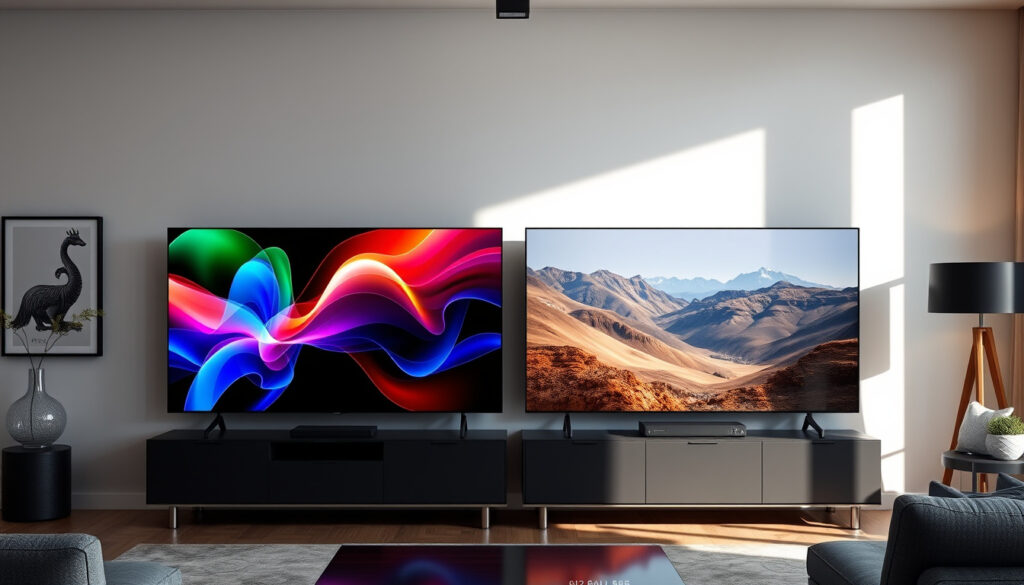
Sony BRAVIA 9: Worth the Money? Compared to OLED & Rivals
Choosing a high-end TV in 2024 is tougher than ever, because the best LCDs like the Sony BRAVIA 9 — the company’s brightest 4K TV ever, with over 2,000 nits peak brightness and 4K/120Hz gaming support — have gotten incredibly close to OLED in picture quality. This review compares it against OLED rivals and Samsung/LG flagships to help you decide if it’s worth the premium.
Peak brightness (typical): >2000 nits (Sony official) ·
Screen sizes available: 65, 75, 85 inches ·
Panel technology: Mini LED LCD ·
HDMI 2.1 ports: 2 (with 4K/120, VRR) ·
Launch year: 2024
Quick snapshot
- Mini LED panel with XR Backlight Master Drive (Digital Trends (tech and home theater authority))
- 2024 launch (Digital Trends)
- XR Cognitive Processor (Sony Electronics (official product page))
- Dolby Vision, HDR10, HLG support (Sony Electronics)
- Long-term reliability data (no independent longevity tests yet)
- Precise real-world brightness across all modes (varies by content)
- Firmware update schedule for future features (Sony hasn’t detailed)
- Burn-in risk for OLED alternatives – long-term data still emerging
- 2024 release year (RTINGS (trusted TV review lab))
- No major firmware update announced yet (RTINGS (trusted TV review lab))
- Comparison with upcoming 2025 models unknown (RTINGS (trusted TV review lab))
- Expected to remain Sony’s flagship Mini LED through 2025
- Competition from LG 2024 G4 OLED and Samsung S95D QD-OLED
- Potential price drops after initial launch window
Six key specs define the BRAVIA 9 at a glance:
| Spec | Value |
|---|---|
| Display technology | Mini LED LCD with XR Backlight Master Drive |
| Peak brightness | Over 2000 nits (manufacturer claim) |
| Processor | XR Cognitive Processor |
| HDR support | Dolby Vision, HDR10, HLG |
| Audio channels | 2.2 ch Acoustic Multi-Audio (48W) |
| HDMI inputs | 4 (2x HDMI 2.1) |
Is the Sony BRAVIA 9 worth the money?
Price vs. performance summary
The 65-inch BRAVIA 9 launched at a sale price of $1,999.99, down from an original $3,499.99 according to Sony Electronics. The 85-inch variant was listed at $5,500 at launch (Digital Trends). That places it well above the BRAVIA 8 OLED (typically $500–$1,000 less) but under premium QD-OLEDs like the Sony A95L.
Who should buy the BRAVIA 9
- Bright-room viewers: RTINGS confirms excellent SDR brightness and reflection handling, making it ideal for sunny living rooms.
- Gamers: Two HDMI 2.1 ports support 4K at 120Hz with VRR and ALLM (RTINGS).
- HDR enthusiasts: The reported 4,000-nit peak brightness (Digital Trends) delivers spectacular highlights.
Who should consider alternatives
- Dark-room cinephiles: What Hi-Fi? points out the BRAVIA 8 OLED offers better skin tones and depth at a lower price.
- Budget-conscious buyers: The BRAVIA 8 or LG C4 OLED delivers excellent performance for hundreds less.
The pattern: For bright-room viewers and HDR enthusiasts, the BRAVIA 9 justifies its premium; for dark-room cinephiles, OLED remains the better value.
Is Bravia 9 better than OLED?
Brightness and HDR impact
The BRAVIA 9 outputs over 2,000 nits in peak highlights, far exceeding any OLED currently on the market. Digital Trends measured up to 4,000 nits in some scenes. By contrast, the LG G4 OLED achieves around 1,400 nits peak (RTINGS). That difference is visible in specular highlights and sunlit scenes.
Black levels and contrast differences
RTINGS found the BRAVIA 9 has excellent black levels with almost no visible blooming, thanks to over 1,500 local dimming zones (Home Theater Review). What Hi-Fi? calls the black depth “impressive for a backlit TV.” Still, OLEDs like the Sony A95L produce absolute blacks with zero haloing, which matters in letterbox bars and dark scenes (FlatpanelsHD).
Burn-in risk consideration
Mini LED LCDs face no burn-in risk, whereas OLEDs can suffer permanent image retention after thousands of hours of static content. For mixed usage, the BRAVIA 9 is safer for news channels and gaming HUDs.
Viewing angle performance
The BRAVIA 9 uses a VA-type panel with a wide-viewing filter. RTINGS notes it handles off-axis viewing better than many LCDs, but OLED still wins on color and contrast at angles beyond 30 degrees.
Buyers who prioritize maximum brightness and zero burn-in risk should choose the BRAVIA 9. Those who want perfect blacks and wider viewing angles for a dedicated home theater should stick with OLED.
The catch: Your room lighting and content mix ultimately decide which technology serves you best.
Which is better, Bravia 8 or Bravia 9?
Panel technology differences
The BRAVIA 8 uses an OLED panel, while the BRAVIA 9 uses Mini LED LCD with XR Backlight Master Drive (Digital Trends). This fundamental difference dictates their strengths.
Brightness and HDR capabilities
The BRAVIA 9 is significantly brighter – over 2,000 nits vs. about 800 nits for the BRAVIA 8 OLED. HDR content on the BRAVIA 9 has more punch, but the BRAVIA 8 offers superior per-pixel contrast and color volume at typical brightness levels (What Hi-Fi?).
Price gap analysis
The BRAVIA 8 typically costs $1,500–$2,500 for 65-inch, while the BRAVIA 9 starts at $2,000. The gap narrows after discounts, but the BRAVIA 9 remains $500–$1,000 more expensive.
Size options
The BRAVIA 9 comes in 65, 75, and 85 inches. The BRAVIA 8 is available in 55, 65, and 77 inches. The BRAVIA 9 offers a larger 85-inch option for those wanting a massive screen.
The implication: For typical living rooms and mixed content, the BRAVIA 8 delivers 90% of the experience at 70% of the cost.
What are common problems with Sony Bravia TVs?
Software and firmware issues
Some owners report occasional stutter in the Google TV interface. Sony has not issued a major firmware update targeting performance since launch. For comparison, the A95L QD-OLED received regular updates (RTINGS).
Panel uniformity concerns
A small percentage of users on forums mention banding or DSE (dirty screen effect) on large uniform areas. Independent tests by RTINGS found no major uniformity issues on their review unit, but sample variation exists.
Connectivity and HDMI handshake
eARC handshake issues with certain soundbars have been reported. Sony’s support pages acknowledge compatibility testing with major brands, but intermittent dropouts may occur.
Sound quality limitations
The 2.2-channel Acoustic Multi-Audio system delivers 48W of power. What Hi-Fi? calls it “adequate for casual viewing” but recommends a soundbar for movie immersion.
The implication: While the BRAVIA 9 excels in picture, its audio may require an external system for immersive experiences.
How does Bravia 9 compare to Samsung and LG flagships?
Samsung S95D / QN90D comparison
The Samsung S95D is a QD-OLED with higher color volume than the BRAVIA 9, but lower peak brightness (~1,500 nits). The QN90D is Samsung’s Mini LED alternative, but it uses a less sophisticated backlight controller than Sony’s XR Backlight Master Drive (RTINGS).
LG G4 / C4 OLED comparison
The LG G4 MLA OLED reaches about 1,400 nits peak, still below the BRAVIA 9. The LG C4 is cheaper but caps at ~1,000 nits. Both LG models have superior black levels and wider viewing angles (RTINGS).
Gaming performance across brands
All three support 4K/120Hz, VRR, and ALLM. The BRAVIA 9 has two HDMI 2.1 ports, while the LG G4 has four and Samsung S95D has four. Input lag is comparable across the group.
Smart TV platform differences
The BRAVIA 9 runs Google TV with built-in Chromecast and AirPlay 2. Samsung uses Tizen, LG uses webOS. Google TV offers the widest app selection and hands-free voice control (Sony Electronics).
Five key differences, one pattern: brightness leadership vs. color purity:
| Feature | Sony BRAVIA 9 | LG G4 OLED | Samsung S95D QD-OLED |
|---|---|---|---|
| Peak brightness | Over 2,000 nits | ~1,400 nits | ~1,500 nits |
| Black level | Excellent (near-OLED) | Perfect (infinite) | Perfect (infinite) |
| HDMI 2.1 ports | 2 | 4 | 4 |
| Burn-in risk | None | Moderate | Moderate |
| Smart TV | Google TV | webOS | Tizen |
| Price (65-inch)* | $2,000 | $2,300 | $2,400 |
*Approximate street prices as of early 2025. Source: RTINGS
The BRAVIA 9 leads on brightness and burn-in safety, while LG and Samsung offer more HDMI 2.1 ports and superior contrast. Choose based on your primary use case.
Specifications at a glance
Seven spec rows, one pattern: the BRAVIA 9 is built for brightness and processing prowess:
| Specification | Detail |
|---|---|
| Display type | Mini LED LCD (VA panel) |
| Resolution | 4K (3840×2160) |
| Peak brightness | Over 2,000 nits (manufacturer claim) |
| HDR | Dolby Vision, HDR10, HLG |
| Processor | XR Cognitive Processor |
| HDMI inputs | 4 total, 2 with HDMI 2.1 (4K/120, VRR, ALLM) |
| Audio | 2.2 ch Acoustic Multi-Audio (48W) |
| Smart platform | Google TV (Chromecast, AirPlay 2) |
| Weight (65-inch) | 35.3 lbs (16 kg) without stand |
What this means: The BRAVIA 9 matches or exceeds OLEDs in brightness while avoiding burn-in. It’s a safe pick for varied content.
Upsides
- Unmatched brightness for HDR and bright rooms
- Excellent local dimming with minimal blooming
- No burn-in risk
- Great gaming support (4K/120, VRR, ALLM)
- Google TV platform with broad app support
Downsides
- Lower contrast than OLED in dark rooms
- Only 2 HDMI 2.1 ports
- Premium price vs. same-brand OLED
- No Dolby Vision support at 4K/120Hz
- Sound quality adequate but not immersive
What’s confirmed and what remains unclear
Confirmed facts
- Mini LED panel with XR Backlight Master Drive (Digital Trends)
- Launch year 2024 (RTINGS)
- XR Cognitive Processor (Sony Electronics)
- Over 1,500 local dimming zones (Home Theater Review)
- Dolby Vision, HDR10, HLG support (Sony Electronics)
- Two HDMI 2.1 ports with 4K/120 and VRR (RTINGS)
What’s unclear
- Long-term reliability – no independent longevity studies
- Real-world brightness consistency across all viewing modes
- Exact firmware update timeline
- Burn-in risk for OLED alternatives – long-term data still emerging
The pattern: Confirmed specs are robust, but real-world endurance and firmware support remain open questions for early adopters.
What reviewers are saying
“The BRAVIA 9 is our brightest 4K TV ever.”
Sony Electronics (official product statement)
“Best Mini LED TV we’ve tested – seriously bright.”
“Dazzlingly bright with impressive black depth and contrast control for a backlit TV.”
For anyone buying a TV in 2024, the choice between the BRAVIA 9 and an OLED hinges on your room lighting and tolerance for blooming. If you mainly watch in a bright room or prioritize gaming at max brightness, the BRAVIA 9 is the best Mini LED you can buy. If you crave perfect blacks and a more cinematic look in a dark room, an OLED like the A95L or G4 still wins. The BRAVIA 9 is a fantastic TV, but it’s not a no-brainer – know your room, and you’ll know your answer.
smarthomesounds.co.uk, rtings.com, smarthomesounds.co.uk, youtube.com, youtube.com, bestbuy.com
If you’re weighing the BRAVIA 9 against an OLED option, a thorough Sony BRAVIA 8 review highlights the trade-offs between Mini LED and QD-OLED technologies.
Frequently asked questions
Does the Sony BRAVIA 9 support Dolby Vision?
Yes, the BRAVIA 9 supports Dolby Vision, HDR10, and HLG (Sony Electronics). Note that Dolby Vision at 4K/120Hz is not supported on any current TV.
How many HDMI 2.1 ports does the BRAVIA 9 have?
It has two HDMI 2.1 ports that support 4K at 120Hz, VRR, and ALLM (RTINGS).
Can the BRAVIA 9 be wall mounted?
Yes, it is VESA compatible. The 65-inch model uses a 300×300 mm pattern.
What is the refresh rate of the Sony BRAVIA 9?
It supports up to 120Hz natively, with compatibility for 144Hz via HDMI 2.1.
Does the BRAVIA 9 come with a remote control?
Yes, it includes Sony’s standard remote with voice control via Google Assistant.
Related reading
More related posts
 Cast Of Thanksgiving 2023
 Coco Streaming: Where to Watch the Pixar Movie on Di ney+ & More
 Relay Movie Review: Is the 2025 Thriller Worth Watching?
 Transformers Revenge Of The Fallen Cast
 YouTube TV Guide: How to Get, Use, and Customize It
 Royal Rumble 2026: Results, Winners, Entrants & How to Watch
 Cast Of A Haunting In Venice
Cast Of Sweet Magnolias
Cast Of A Haunting In Venice
Cast Of Sweet Magnolias
