Fences: Top Questions Answered (True Story, Message, Oscar)
There are a few plays that keep finding new audiences across generations, and August Wilson’s Fences is one of them. It weaves a 1950s Pittsburgh family story around Troy Maxson, a former baseball player turned sanitation worker whose dreams curdle into bitterness. Below, we untangle the most common questions about the play and the 2016 film adaptation, from its fictional origins to Gabriel’s disability and the real message behind that fence.
Play Premiere: 1983 (Broadway) ·
Film Release: 2016 ·
Academy Awards Won: 1 (Best Supporting Actress) ·
Based on True Story: No, fictional
Quick snapshot
- Fences is fictional, written by August Wilson (SparkNotes (literary study guide))
- Viola Davis won the Academy Award for Best Supporting Actress in 2017 (Academy of Motion Picture Arts and Sciences (official film awards body))
- Gabriel Maxson was disabled by a WWII head injury requiring metal plates (SparkNotes (literary study guide))
- The exact medical nature of Gabriel’s injury is not specified in the play (SparkNotes (literary study guide))
- Whether Gabriel’s institutionalization was fully coerced or partly voluntary remains ambiguous (August Wilson Journal (academic peer-reviewed journal))
- 1983: Play premieres on Broadway, wins Tony Award for Best Play (Tony Awards (official theatre awards organization))
- 2016: Film adaptation released, directed by Denzel Washington (IMDb (film database))
- 2017: Viola Davis wins Oscar for Best Supporting Actress (Academy of Motion Picture Arts and Sciences (official film awards body))
- Fences continues to be produced in regional theatres worldwide (The Reminder (local arts publication))
- Critical analysis of Gabriel’s disability is growing, with new readings in academic journals (JSTOR (academic database))
Was Fences based on a true story?
Fences is a work of fiction. Playwright August Wilson created Troy Maxson and his family from his imagination, drawing on the broader African American experience of the mid-20th century. The play is set in 1950s Pittsburgh, but no single real person or event inspired the plot.
Wilson did, however, root his story in historical truth. The 1950s saw Black families migrating north, facing segregated housing, limited job options, and the lingering effects of discrimination in professional sports. Troy’s bitterness about being kept out of Major League Baseball reflects real barriers — Jackie Robinson broke the color line in 1947, but many talented Black players never got their shot. Research from the SparkNotes (literary study guide) notes that Wilson did extensive research on the era to ground the dialogue and setting in authentic detail.
Because Fences is fictional, viewers sometimes confuse its emotional truth for literal biography. The power of the play comes from its emotional accuracy about family dynamics — not from documenting real events.
Wilson’s choice to invent a family rather than adapt a true story gave him freedom to compress generational trauma into one yard in Pittsburgh.
What is the message behind Fences?
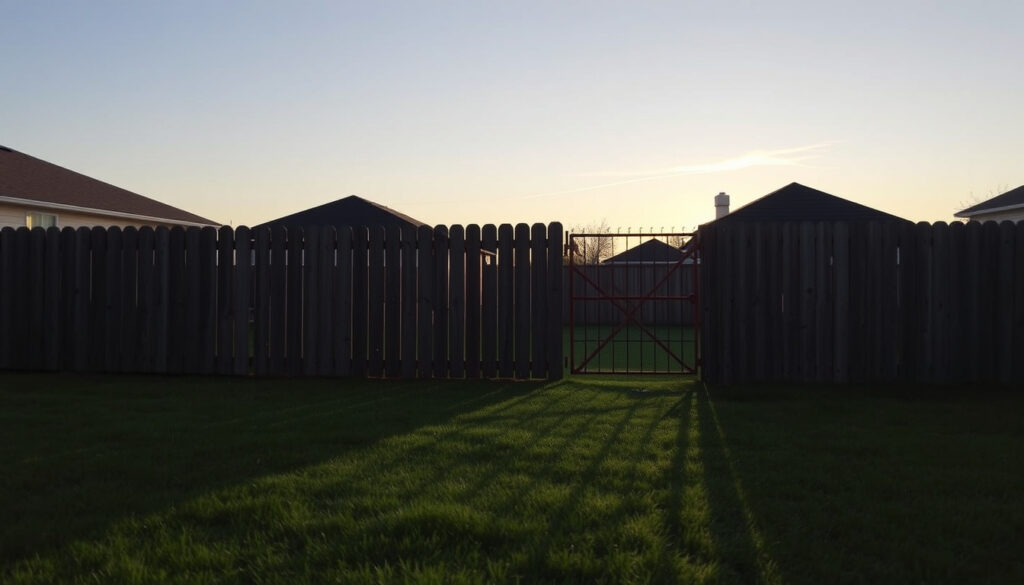
The fence that Troy builds runs through the play as a central symbol. It represents both what he keeps out — his failures, his fears, the changing world — and what he tries to protect. Wilson said the play is about “the relationship between a father and a son, and the cost of dreams deferred.” The message is layered across several themes.
Race and opportunity in 1950s America
- Troy’s failed baseball career stands as the central metaphor. He was a star in the Negro Leagues but never played in the majors because of segregation (SparkNotes (literary study guide)).
- His job as a sanitation worker — a “garbage man” — humiliates him because he sees it as a role white men refuse (SparkNotes (literary study guide)).
- He speaks of the “white man’s world” as a cage, and his anger at systemic racism poisons his relationships (eNotes (educational resource platform)).
Fatherhood and legacy
- Troy’s son Cory wants to play college football, but Troy blocks him — partly out of protection, partly out of jealousy (SparkNotes (literary study guide)).
- The conflict between them echoes Troy’s own childhood: his father was harsh and absent, and Troy carries that wound forward (SparkNotes (literary study guide)).
- By the end, Cory chooses not to attend Troy’s funeral — a final break in the chain of inheritance (eNotes (educational resource platform)).
The cost of dreams deferred
- Rose, Troy’s wife, gave up her own dreams of singing to build a home. She tells Troy, “I planted myself inside you” — a line about sacrifice that defines her character (SparkNotes (literary study guide)).
- Troy’s dream of baseball never died; it curdled into resentment that he unleashes on everyone around him (eNotes (educational resource platform)).
- The fence itself, when finished, encloses a yard where Rose will continue to live — not the protection Troy imagined, but a boundary of a life confined (SparkNotes (literary study guide)).
Troy builds the fence to protect his family, but each swing of the hammer drives his son away. The thing he builds to keep his world safe becomes the thing that shuts out the people he loves most.
Fences does not offer a single message — it offers a conflict. The play asks whether protection and control are the same thing, and whether love can survive deferred dreams.
Who won an Oscar for Fences?
The 2017 Oscars brought one win and two additional nominations for the film adaptation.
| Actor | Category | Result |
|---|---|---|
| Viola Davis | Best Supporting Actress | Won (Academy of Motion Picture Arts and Sciences (official film awards body)) |
| Denzel Washington | Best Actor | Nominated (Academy of Motion Picture Arts and Sciences (official film awards body)) |
| August Wilson (nomination) | Best Adapted Screenplay | Nominated (posthumous) (Academy of Motion Picture Arts and Sciences (official film awards body)) |
Viola Davis won the Academy Award for Best Supporting Actress for her performance as Rose Maxson. Her acceptance speech included the line, “There is no greater privilege than being a vessel for August Wilson’s words.” The win was historic — Davis became the first Black actress to win a Tony, an Emmy, and an Oscar (Academy of Motion Picture Arts and Sciences (official film awards body)).
Denzel Washington was nominated for Best Actor but did not win. He also directed the film. The screenplay — written by Wilson before his death in 2005 — received a posthumous nomination (IMDb (film database)).
Viola Davis’s win snapped a long losing streak for Fences at major awards — but Denzel Washington, a titan of cinema, remains one of the most-nominated actors ever without a win in the Best Actor category (Guinness World Records (record-keeping organization)).
The film Fences earned four Oscar nominations and took home one trophy — a respectable haul that measures moments, not merit.
What is Gabriel’s disability in Fences?
Gabriel Maxson, Troy’s brother, was shot in the head while serving in World War II. The injury caused traumatic brain damage that required metal plates to be surgically implanted in his skull (SparkNotes (literary study guide)). The play presents him as cognitively disabled: he recognizes family members, earns small money selling fruit, but cannot hold a regular job or live fully independently (SparkNotes (literary study guide)).
Traumatic brain injury
- Gabriel’s condition is never given a formal medical diagnosis in the play. The text describes his behavior — childlike, trusting, prone to wandering and public outbursts (SparkNotes (literary study guide)).
- He receives disability payments from the government, which Troy uses to help pay for the family’s house — a source of tension in the play (eNotes (educational resource platform)).
- Gabriel is later committed to a mental hospital, and Troy reportedly continues to collect a portion of his disability check after that (August Wilson Journal (academic peer-reviewed journal)).
Symbolic role
- Gabriel believes he is the Archangel Gabriel, tasked with chasing hellhounds and guarding the gates of heaven (SparkNotes (literary study guide)).
- At Troy’s funeral, Gabriel appears with a trumpet, tries to call his brother into heaven — and fails. The horn emits no sound, or a broken note, depending on the production (eNotes (educational resource platform)).
- The August Wilson Journal (academic peer-reviewed journal) argues that this final scene creates “a trauma that a sane and normal mind would be unable to withstand” — challenging both the audience and Gabriel’s own delusions.
Gabriel is both a literal character — a brain-injured veteran — and a spiritual metaphor. Wilson uses his disability to criticize a nation that sent Black soldiers to fight but refused them full citizenship upon return. The symbolism enriches the play, but some critics argue it risks reducing Gabriel to a symbol rather than a person.
Disability in August Wilson’s dramas remains “under-examined in critical discourse,” according to research on JSTOR (academic database). Gabriel represents one of the few prominent disabled characters in canonical American drama, and his treatment by Troy — who uses his benefits — highlights how exploitation can happen even within families.
What did Troy’s father do to the girl?
Troy tells the story of his father as a memory of cruelty and abandonment. When Troy was a child, his father caught him with a girl — and made him watch as he “took” her himself. Troy was 14 years old (SparkNotes (literary study guide)).
The event shattered Troy’s relationship with his father. He ran away from home soon after, ending up on his own at 14 — an experience that shaped his fierce, distrustful approach to the world. Wilson uses this story to explain why Troy became the man he is: harsh, controlling, and terrified of vulnerability (eNotes (educational resource platform)).
Troy’s childhood trauma
- Troy’s father was a sharecropper who worked Troy and his siblings hard, beat them, and offered no affection (SparkNotes (literary study guide)).
- The assault on the girl is the moment Troy says he “became a man” — but it is a twisted definition of manhood rooted in violation (eNotes (educational resource platform)).
- Troy tells this story not as confession but as explanation. He wants his son Cory to understand why he is the way he is.
Intergenerational impact
- Troy’s own failures as a father — blocking Cory’s football dreams, refusing to attend his games — stem directly from this trauma (SparkNotes (literary study guide)).
- Wilson’s play shows how pain travels through generations: Troy’s father abused him, Troy abuses Cory (though differently), and Cory has to choose whether to break the cycle (The Reminder (local arts publication)).
Troy uses his father’s abuse as justification for his own harshness. Wilson refuses to let the audience off the hook: we understand Troy’s pain, but we also see him inflict fresh wounds on his son. Sympathy and condemnation coexist.
Fences argues that trauma passes down whether we want it to or not — the only way to stop it is conscious refusal, and Troy never manages that refusal.
Conclusion
Fences remains August Wilson’s most-performed play because it captures a specific family and a universal dilemma: how do you protect your children without crushing them? Troy Maxson is not a hero or a villain — he is a man who built a fence around his heart and called it love. For anyone teaching, studying, or simply watching the play, Wilson leaves the question of whether the next generation will build a different kind of fence.
For viewers who enjoy exploring production details and cast stories through structured guides, similar TV series FAQs provide a thorough look at both the creative process and on-screen performances.
Frequently asked questions
Why is the title ‘Fences’?
The fence that Troy builds is a central symbol representing barriers — between races, between generations, between protection and imprisonment. Wilson chose the title to emphasize both physical and metaphorical boundaries in the characters’ lives.
What awards did the play Fences win?
The original 1983 Broadway production won the Tony Award for Best Play, among several other Tony nominations. The 2016 film earned four Academy Award nominations and one win (Viola Davis for Best Supporting Actress).
Is the film Fences available on Netflix?
Availability changes by region. As of early 2025, Fences is available on streaming services including Paramount+ and Amazon Prime Video in the US, with rental options on Apple TV and Google Play. Check local listings.
Where was Fences filmed?
The film adaptation, directed by Denzel Washington, was shot primarily in Pittsburgh, Pennsylvania — the same city where the play is set. Specific locations include the Hill District neighborhood.
How long is the play Fences?
The play typically runs about 2 hours and 30 minutes with an intermission. The 2016 film has a runtime of 2 hours and 19 minutes.
What is Gabriel’s disability in Fences?
Gabriel Maxson was shot in the head during World War II, causing traumatic brain injury that required metal plates in his skull. The injury left him with cognitive disabilities, and he believes he is the Archangel Gabriel.
Who lost an Oscar 18 times?
No one has lost an Oscar 18 times. The record for most nominations without a win is held by Greg P. Russell (sound mixing) with 17 nominations. In the acting categories, Peter O’Toole held the record with 8 nominations without a competitive win.
More related posts