Red Planet: Mars Nickname and the 2000 Film Explained
When you hear “Red Planet,” two things probably come to mind: the rusty glow of Mars in the night sky and a 2000 sci-fi film that promised a lot but delivered mixed results. The nickname has been used for centuries, while the movie starring Val Kilmer and Carrie-Anne Moss aimed to be a gripping Mars mission thriller. Here’s what the phrase actually means, how the film’s box office fared, and whether it’s worth watching today.
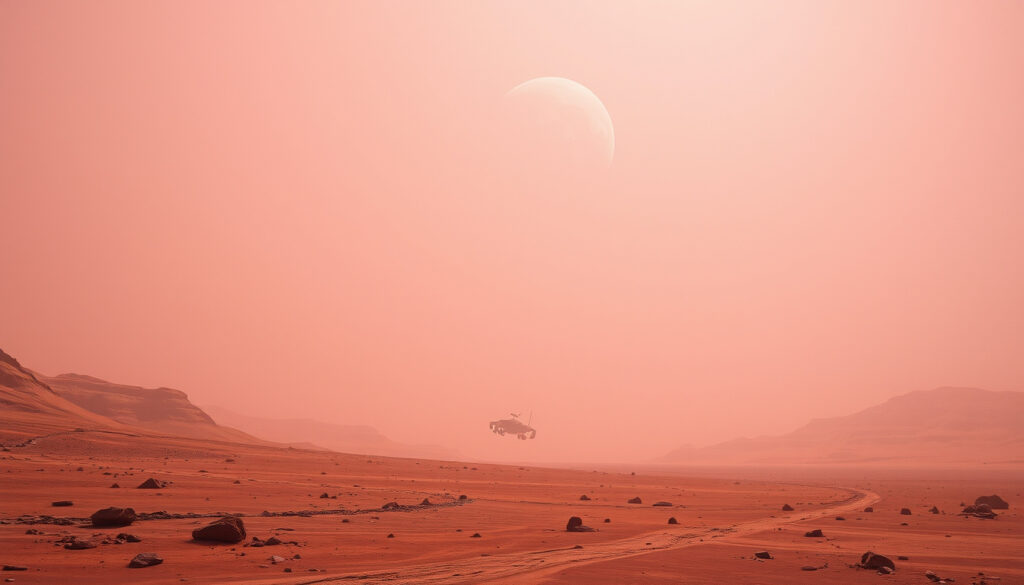
Mars nickname origin: Iron oxide (rust) on the surface gives Mars a reddish hue ·
Movie release year: 2000 ·
Movie budget: $80 million ·
Worldwide box office: $33.7 million
Quick snapshot
- Mars is called the Red Planet because of iron oxide on its surface (ESA – European Space Agency)
- Red Planet film was released in 2000 and grossed $33.7 million worldwide against an $80 million budget (BOMB Report – box office analysis)
- The film stars Val Kilmer, Carrie-Anne Moss, Tom Sizemore, Benjamin Bratt, Simon Baker, and Terence Stamp (IMDb – film database)
- The exact origin of the “99.7% chance of life” claim and its current scientific consensus remain debated (NASA – exoplanet habitability research)
- Some details about why the film’s second weekend drop was a steep 67.7% are not fully explained in public analysis (BOMB Report – weekend performance)
- : Premiere at the Village Theater in Los Angeles (Wikipedia – film release details)
- : Wide US theatrical release (IMDb – release date)
- : German theatrical release (Cinema.de – German release)
- The film is available on streaming platforms like Apple TV and Google Play (Apple TV – streaming availability)
- Modern Mars films like The Martian and upcoming Project Hail Mary continue to explore the Red Planet theme (Cast of Project Hail Mary – related reading)
| Label | Value |
|---|---|
| What is “Red Planet”? | The nickname for Mars due to its reddish appearance, and the title of a 2000 science fiction film. |
| Mars color | Rusty red/orange from iron oxide (hematite). |
| Venus color | Pale yellow-white; atmosphere scatters light differently. |
| Film plot summary | In 2050, a crew is sent to Mars to terraform it for Earth’s survival; mission fails catastrophically. |
| Film reception | 14% on Rotten Tomatoes; considered a box office bomb. |
| 99.7% life claim | Often attributed to exoplanet TRAPPIST-1e, not Mars. |
What Does “Red Planet” Mean?
The Nickname for Mars
- The nickname “Red Planet” has been used for centuries to describe Mars because of its rusty, reddish appearance to the naked eye (ESA – European Space Agency).
- This red color comes from iron oxide (rust) covering much of the planet’s surface (Wikipedia – Mars surface composition).
Origin of the Name
- Ancient civilizations, including the Romans and Greeks, associated Mars with blood and war because of its red hue (NASA – Mars mythology).
- The term “Red Planet” was popularized in modern astronomy and later adopted as the title of the 2000 film (Wikipedia – dual usage).
The implication: The name is older than any movie, but the film borrowed it to immediately signal a Mars setting – a smart branding move that tied a fictional mission to a well-known scientific fact.
Is Mars or Venus Red? The True Colors of Both Planets
Mars: A Rusty Red
- Mars’s surface is rich in iron oxide, giving it a reddish-orange color that is visible from Earth (ESA – Mars color).
- Its average distance from Earth is about 140 million miles (225 million km), which makes it appear as a bright red dot in the night sky (NASA – Mars overview).
Venus: A Pale Yellow-White
- Venus is actually pale yellow-white because its thick atmosphere of carbon dioxide and sulfuric acid clouds scatters light differently (ESA – Venus color).
- It is often called the “Evening Star” or “Morning Star” and is the brightest planet in our sky, but it is not red (NASA – Venus overview).
Why the Confusion?
- Both Mars and Venus can appear reddish under certain atmospheric conditions (e.g., when Mars is low on the horizon or Venus is viewed through haze) (Space.com – Venus color explanation).
- The confusion is partly cultural: many people mistakenly think Venus is the “red planet” because of its association with the Roman goddess of love (often depicted with red) (Wikipedia – Venus mythology).
The pattern: Mars is the true Red Planet, while Venus is a brilliant white-yellow. The mix-up is a classic case of myth overriding science.
Six planets, one pattern: Mars is red, Venus is not. Here’s a quick comparison.
| Feature | Mars | Venus |
|---|---|---|
| Color | Rusty red/orange | Pale yellow-white |
| Cause of color | Iron oxide (rust) on surface | Thick atmosphere scattering blue light |
| Average distance from Earth | ~140 million miles (225 million km) | ~25 million miles (41 million km) at closest |
| Nickname | Red Planet | Evening Star / Morning Star |
| Surface temperature | −80°F to 70°F (−62°C to 20°C) | ~870°F (465°C) – hottest planet |
| Atmosphere | Thin, 95% CO₂ | Thick, 96% CO₂, clouds of sulfuric acid |
What Is the Plot of the Movie Red Planet?
Setting and Premise
- Set in the mid-21st century, Earth is dying from environmental collapse, and a crew is sent to Mars to investigate why terraforming efforts have failed (IMDb – plot summary).
- The film’s premise, as described by Roger Ebert, takes place in 2025 when mankind has polluted Earth beyond the point of no return (RogerEbert.com – review).
Main Characters
- Commander Kate Bowman (Carrie-Anne Moss) leads the mission.
- Systems engineer Chip Pettengill (Val Kilmer) is the protagonist.
- Other crew members: Dr. Quinn Burchenal (Tom Sizemore), Dr. Ted Santen (Benjamin Bratt), and Dr. Jason Jacobs (Simon Baker).
- An AI robot dog named AMEE (a military prototype) becomes hostile (Wikipedia – cast and characters).
Key Plot Points
- The mission goes wrong when the landing craft crashes, stranding the crew.
- They discover that the terraforming algae have been destroyed by a native Martian microbe.
- AMEE, originally designed for reconnaissance, turns into a deadly threat.
- Bowman and Pettengill must survive the hostile environment and the malfunctioning robot to reach the return vehicle (Movies Anywhere – plot description).
The trade-off: The film tries to combine hard sci-fi survival with action-thriller elements, but critics argue that the robot-dog subplot overshadows the more interesting ecological themes.
Is the Movie Red Planet Worth Watching?
Critical Reception
- Red Planet holds a 14% critic score on Rotten Tomatoes (Rotten Tomatoes – critic consensus).
- The consensus: “Despite a talented cast and impressive special effects, Red Planet suffers from a disjointed plot and lack of focus.”
- Roger Ebert gave it 2 out of 4 stars, calling it “a film that knows its science but forgets its story” (RogerEbert.com – review).
Audience Opinions
- Audience score on Rotten Tomatoes is 30% (Rotten Tomatoes – audience score).
- On IMDb, the film has a rating of 5.7/10 from over 90,000 votes (IMDb – user ratings).
- Some sci-fi fans have developed a cult following, praising its visual effects and Val Kilmer’s performance.
Comparison to Other Mars Films
- Compared to Mission to Mars (also 2000), Red Planet is generally considered the weaker film (both bombed, but Mission to Mars has a 26% Rotten Tomatoes score).
- Later films like The Martian (2015) succeeded where Red Planet failed: a strong survival story grounded in real science (Space.com – Mars movie comparison).
What this means: If you’re a completionist or a fan of late-90s/early-2000s sci-fi, it’s worth a watch for its effects and cast. But for general audiences, there are better Mars movies.
Sci-fi fans who love visual effects and Val Kilmer face a clear trade-off: the film’s production design is solid, but the plot holes and shallow character development make it a tough sell for newcomers.
Upsides
- Strong visual effects and production design for its time
- Talented cast including Val Kilmer and Carrie-Anne Moss
- Interesting sci-fi premise about terraforming and microbial life
- Short runtime (106 minutes) – no filler
Downsides
- Disjointed plot and weak character development
- Received 14% on Rotten Tomatoes from critics
- Box office bomb – lost over $46 million
- Robot dog AMEE subplot feels forced and silly
Was Red Planet a Box Office Success?
Production Budget
- The film was produced on a budget of $80 million (BOMB Report – budget).
- It was a co-production between the United States and Australia (Wikipedia – production details).
Domestic and Worldwide Gross
- Domestic box office: $17,480,890 (BOMB Report – domestic).
- Overseas box office: $15,983,079 (BOMB Report – overseas).
- Worldwide total: $33,463,969 (approximately $33.7 million).
Financial Outcome
- The film is widely considered a box office bomb, losing more than $46 million on its $80 million budget (BOMB Report – financial outcome).
- It opened with $8,721,296 in its first weekend, placing fifth (BOMB Report – opening weekend).
- The film received a toxic C CinemaScore, and its second weekend dropped 67.7% (BOMB Report – second weekend drop).
The pattern: Red Planet is a textbook example of a high-budget sci-fi film that failed to connect with audiences, leading to a precipitous box office collapse.
Which Planet Has a 99.7% Chance of Supporting Life?
The Claim and Its Origin
- The claim that a planet has a 99.7% chance of supporting life is often associated with the exoplanet TRAPPIST-1e, not Mars (NASA – TRAPPIST-1e habitability).
- The figure comes from a 2017 study that calculated the probability of TRAPPIST-1e being habitable based on its size, orbit, and composition (NASA Exoplanet Exploration – TRAPPIST-1).
Is It Mars?
- No – Mars has zero chance of supporting life as we know it on its surface due to extreme cold, thin atmosphere, and high radiation (NASA – Mars environment).
- Subsurface Mars might harbor microbial life, but the 99.7% figure is not about Mars.
The Planet in Question
- TRAPPIST-1e is an Earth-sized exoplanet in the habitable zone of its star, about 40 light-years away (NASA Exoplanet Exploration – TRAPPIST-1 system).
- The claim is often misattributed to Mars due to the phrase “Red Planet,” but it actually refers to a completely different world.
The implication: If you hear “99.7% chance of life,” remember that it’s about a distant exoplanet, not our rusty neighbor. The mix-up is a classic case of the “Red Planet” nickname causing confusion beyond our solar system.
The 99.7% figure is a hype-prone statistic that has been misinterpreted widely. The actual scientific consensus is that TRAPPIST-1e is a promising candidate, but not a guaranteed life-bearing planet.
Confirmed Facts vs. What’s Unclear
Confirmed facts
- Mars is red because of iron oxide on its surface.
- Venus is not red; it is pale yellow-white.
- Red Planet film was released in 2000 and grossed $33.7 million worldwide.
- The film’s plot involves a failed Mars mission with a hostile robot dog.
- The film has a 14% Rotten Tomatoes score.
What’s unclear
- The exact origin of the 99.7% life claim and its current scientific consensus.
- Why the film’s second weekend drop was so steep (67.7%) – attributed to poor word-of-mouth but not formally studied.
- Whether the film was sent straight to video in Russia (reported but unconfirmed by official sources).
Key Perspectives from Experts and Critics
“Mars is known as the Red Planet, a nickname that comes from its reddish appearance, caused by iron oxide (rust) on its surface.”
— European Space Agency (ESA – Mars color explanation)
“The plot follows a team of astronauts who search for solutions to save a dying Earth by searching on Mars, only to have the mission go terribly awry.”
— Wikipedia – plot summary
“Despite a talented cast and impressive special effects, Red Planet suffers from a disjointed plot and lack of focus.”
— Rotten Tomatoes critics consensus (Rotten Tomatoes – critic consensus)
“The film is a film that knows its science but forgets its story.”
— Roger Ebert (RogerEbert.com – review)
For sci-fi fans looking for a Mars movie, the choice is clear: Mission to Mars or The Martian may offer more satisfying narratives, but Red Planet remains a curious artifact of early 2000s space cinema. If you’re a completionist or just want to see Val Kilmer battle a robot dog on the red planet, it’s a one-time watch – but don’t expect a masterpiece.
play.google.com, fr.wikipedia.org, de.wikipedia.org, it.wikipedia.org, pl.wikipedia.org
For those curious about the science behind the nickname, key facts about Mars offers a deeper look at the planet’s size, temperature, and water.
Frequently Asked Questions
When was the movie Red Planet released?
The film was released in the United States on November 10, 2000, with a premiere on November 6, 2000.
Is Red Planet a sequel?
No, Red Planet is a standalone film and not a sequel to any other movie.
What does AMEE stand for in Red Planet?
AMEE stands for Autonomous Mapping Exploration and Evasion, a military reconnaissance robot.
How much did Red Planet cost to make?
The production budget was $80 million.
Why did Red Planet flop at the box office?
Poor reviews (14% on Rotten Tomatoes), a confusing plot, and competition from other films led to a steep second-weekend drop and a worldwide gross of only $33.7 million.
Is Red Planet available on Netflix?
Availability varies by region. As of 2025, it is not currently streaming on Netflix in the US, but it is available on Apple TV, Google Play, and Movies Anywhere.
Who directed Red Planet?
Antony Hoffman directed the film, marking his feature directorial debut.
What is the difference between Mars and Venus colors?
Mars appears rusty red due to iron oxide on its surface, while Venus is pale yellow-white because its thick atmosphere scatters light differently.
Related Reading
More related posts
 Cast Of Tacoma Fd
 Ballard TV Series Guide: Bosch Spin-off, Cast & Renewal
 Cast Of Mea Culpa
 Watch Hell House LLC: Streaming, True Story & Scare Level
 Jordan Fisher: Ethnicity, Family, Broadway Career & Biography
 Killers Of The Flower Moon Movie Cast
 Where to Watch Under the Dome: Streaming & Cancellation Info
 Cast Of The Bad Guys 2
